JOIN US FOR FREE 4HR OVERRULED CLE NOVEMBER 5th @ LOEWS HOTEL
Absolutely NO FEE Unless We Win!



Feb 2024 | Overruled with Scott Vicknair
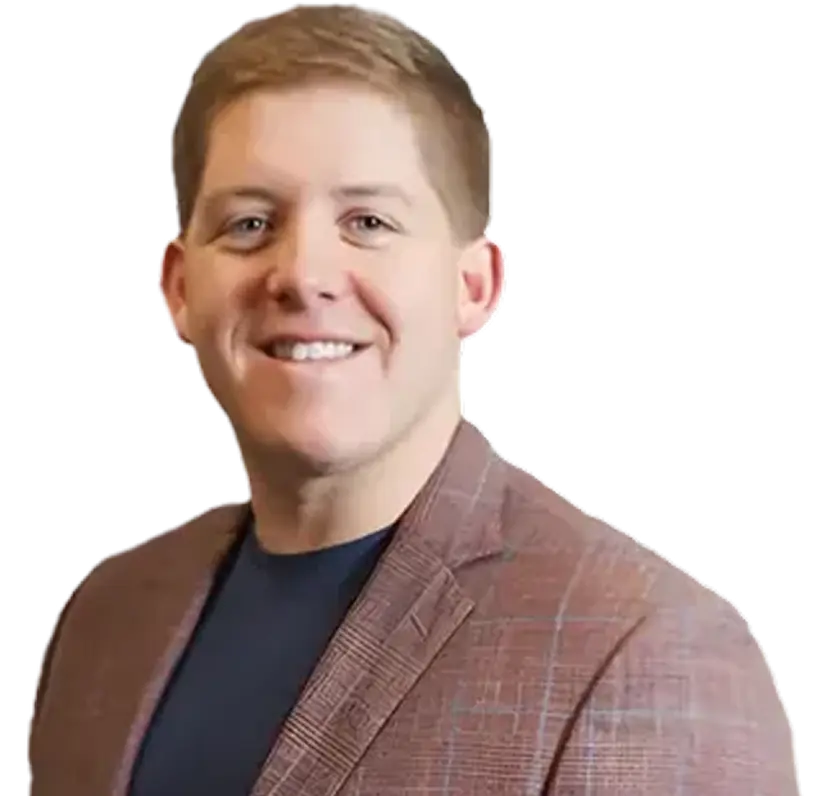
Each of us faces that daily struggle of balancing work and family while trying to find time to address our health and fitness needs. It’s often easier to learn to live with the pain rather than taking the time to find someone who can help you. That’s why we wanted to bring on a good friend of ours to address a problem that needs improvement. Blake Barbera, PT, DPT, Cert. DN, is a Thibodaux native and the owner and founder of Evolve Rehab & Recovery.
He began his business about a year ago after working in a traditional PT clinic in order to help provide a higher level of focus, attention and direction for people. His approach is aimed to make the journey to improved health easier for people and we want to learn more about that. So we’re going to talk with him about health and fitness but we’ll focus on therapy and long-term fitness, treatment and tips you can use. Sometimes the hardest part is just taking action and we hope this show will help motivate you to do just that.
Here’s some of what we discuss in this episode:
0:00 – Intro
5:06 – Tips for developing better long-term fitness
9:50 – Muscle strength provides better quality of life as you get older
14:25 – 3 dietary tips
16:45 – What differentiates those who struggle from those finding success?
20:10 – Flexibility to build your schedule 23:55 – Blake’s superpower & book recommendation About our guest:
All right, good morning everybody, this is David Vicknair, and I’m here with my co-host for the show today, Caitlin Carrigan, Brad is out of town. Caitlin, thanks so much for being with us today.
Of course, thank you all, hope Brad is enjoying the Italian lifestyle still, for the record, Caitlin’s been counting the days that Brad’s been in Italy with his wife.
This is the Overruled podcast, brought to you by Scott Vicknair, we’re really excited, we have an awesome guest today, a close personal friend of mine, Blake Barbera, who’s a physical therapist, he’s been a therapist for many years now, about 11 or 12 years, and we’re excited to talk to him today about different health and fitness tips, as well as therapy and long-term fitness and therapy ideas, treatment, and also tips for all of our listeners. Blake, thanks so much for being with us, welcome, Blake Barbera, Evolve Rehab and Recovery, welcome to Overruled.
Thanks for having me.
All right, Blake, I was hoping you could just tell us briefly a little about Evolve Rehab and Recovery, I know for many years you had been in a traditional PT clinic, but that you went on your own and started your own business about a year ago, which was Evolve. Can you tell us a little about it, the types of treatments, patients you treat, and a little about the business?
Evolve Rehab is a hybrid physical therapy practice, which means it’s one-on-one, it’s all cash-based, the first evaluation is 90 minutes long, so I don’t feel the need to hurry through the background, you know, when did your back pain start, it hurts you during squats but has it always been there, do you notice it with other activities, all those types of questions there’s just no time for in a traditional setting. I always tell people, when they go to the doctor, think about your issue, whatever it is, no matter what the medical issue is, and write your questions down and have them prepared, because if you don’t, you’re going to get in that visit, you’re going to go blank, you’re going to start looking at the doctor or the therapist, whoever it is, and before you know it they’re gone and you don’t have any questions answered. So in this setting it allows people, I think, to get comfortable and be a little more vulnerable, and a lot of times speak from their heart, a lot of times, from my experience over the last year, there are so many things that hold people back from their fitness journey or their health that are not truly physical.
Sure.
There are a lot of physical ailments that are presented because we’re stressed at home, or we work 12-hour days and go home to kids and family and don’t sleep, and now our whole system is thrown off, whether from inflammation or lack of activity or whatever it might be, and so it allows me to find those issues and help people help themselves, essentially, sometimes it’s not always a physical fix.
I’m guessing too that what it boils down to is, the model essentially allows you to spend way more time with each individual patient and ultimately render better care, so I guess my question is, is this a growing trend in the healthcare industry, are you seeing more pieces of it, at least from your perspective, that would have typically been an insurance-based model, moving to cash pay, like dentists, a lot of dentists have always skewed more to cash pay, that’s just an observation I’ve made, but I’m wondering if you’re seeing that more in the therapy world now.
Yeah, for sure, I’m part of a community of people that are all cash-based, we discuss what we do, right, ongoing, and how we implement things and try to help deliver a better product for people, and that’s ultimately what it’s about, we all got into healthcare to help people, and we get so burnt out in the traditional system, not only for ourselves but for our patients, and for me personally it was going to work every day having a plan of what that day was going to turn out like, and then getting in the midst of the craziness and legitimately having to decide who I was going to commit my time to for that day, and I just always felt guilt about that inside of me, that I’m choosing to work with you over you, because maybe you’re a little further in the process and you’ve been here long enough to know what you need to do, but this person’s in pain and I need to go spend time with them, and that’s unfair to the person who’s maybe halfway through their journey and just needs that little extra push or that little adjustment in their exercise program to get over the hump, and I have to choose not to spend time with them. So that’s probably the biggest thing, the money is not the driver, we don’t do cash because we want to make more money, you can make a lot more money seeing four or five people at a time than seeing one at a time, right, it’s really about how we help people and why we do the job we do, essentially.
All right, well, let’s jump into health and fitness now. Can you give our listeners, from what you see training your patients, two or three key little tips that you wish people did regularly to develop not only their short-term but long-term fitness and health? Is it any coincidence that we’re asking Blake these questions today before you leave for your beach trip?
What can I do in 24 hours, give me a crash diet.
Larry, over the next.
I’m gonna go for a walk every day on the beach, or wherever you’re going.
Just don’t swim with the sharks, come back safely, great advice.
So I guess a couple things, the first thing, in terms of being successful long-term, is be honest with yourself about where you’re at and where you want to go and where you want to see yourself, and then once you can be honest with yourself about where you’re at, be willing to take the uncomfortable step to just move toward that direction, and don’t feel like you need to be able to achieve whatever that goal or level of fitness or health is in a short period of time. So that’ll be the first thing, be honest, reflect on where you’re at and why you’re there, and then be willing to make changes, either in the way you live your life or maybe just your commitment to show up, right, to better move toward your goal. The second thing would be to give yourself some grace and some flexibility in the process, far too often, whether it’s a fitness journey or a diet, for the sake of losing weight, that many people go on, we get so caught up in not showing up, or eating a bad meal, or not having a good week, that we allow it to derail ourselves in the process. So I think just understanding that it is a process, right, nobody develops long-term back pain in a day, nobody develops obesity in a day, and so why we have this perception that we should be able to go see someone, or show up to the gym or do a crash diet and have it go away in a couple sessions or a month or two months or six months, is just a false sense of reality. So allowing yourself to stumble along the way but then just continue to get up and move in the right direction, and that brings me to my last thing, develop as much consistency and a routine as possible, and I think if you do that ultimately you’re going to find progress, it may not be as fast as you’d like it to be, but progress is progress. If you look at diet, because this is an easy thing for people to relate to, everybody wants to lose a bunch of weight, and nobody is happy with losing two pounds in a month, they think, oh my gosh, I only lost two pounds this month, but if you just think about it over the course of a year, how happy would you be at the end of the year if you lost 25 pounds?
Yeah, absolutely, that’s what I probably would be thrilled, right. I saw something interesting too, yesterday, just by chance, and knew we were going to talk about this, a motivational speaker I follow on Instagram, talking about how you have to get up and do it, everybody talks about, oh, I see that person who gets up early every morning and goes to the gym, and that’s so, that person just gets up and does it, and they make it look easy, most people who do the things that look easy, which are hard things, just do them. So what I found, which is probably what you find with a lot of patients who are consistently training and focusing on health and fitness, is if I just make myself do it at the time that’s best for me in the day, it just gets done and it becomes a routine, then you don’t even think about it anymore, it becomes part of your life, right?
Yep, it is always better to show up and do it, also do a workout that you’d consider to be just 50% of what you could normally give, than to sit at home and sulk and be upset and then deal with the frustration of not showing up at all, mentally, physically, it’s always better to do something than do nothing, and as you build the habit, eventually you’ll have more and more of those good days you’re really proud of.
You know, I heard you talk once, Blake, I think on a fitness podcast you were on, and I thought this was a really good, interesting point I never really thought of before, and it kind of dovetails into my next question, which is, how important do you find that weightlifting is, some people fall right into running or cardio as a health and fitness tool, but how critical, from your perspective, is weightlifting being part of a health regime? And the thing I heard you talking about once before is, squats are hard, nobody wants to do squats, but when you think about long-term fitness, not just what you want to look like in six months or a year, elderly people typically have problems sitting down and getting back up, so the weightlifting habits and things you’re doing now are going to enable you to have a quality of life 40 or 50 years from now, can you talk about that a little? I just thought that was a really interesting point I heard you make and never really thought of it in that context.
Yeah, it’s probably my favorite thing to talk about, because I think everyone relates, when you get older, to be the age of being a grandparent, you have grandkids and things like that, we often see those people as being old, the older I get, the less I see that.
Wise beyond her years.
But the thing that strikes me, and I see it in myself too, somebody asked me to go play in an adult soccer league, and I was like, oh no, I can’t do that, because, well, for one, if I get injured, my business is gone. But as we get older, we become more and more fearful of more and more things, and that’s strictly a consequence of not doing them regularly enough, and so when you get older, the things you become fearful of are even more simple, like, oh my gosh, I can’t get down on the floor with my grandkids because I don’t want to need help getting up, or I’ve fallen and I can’t get up, what is that thing, Life Alert, that everyone wears, if those people would have just gotten up and down from their chair 20 times a day as a form of exercise, outside of breaking a bone when they fall, they’d be able to get up, it’s really that simple. So from a muscle-strengthening development standpoint, that is so much more beneficial to long-term health, in my opinion, than cardio. Another stat that I find will probably interest people is, from the age of 30 you lose one to two percent of muscle per year if you don’t exercise, if you don’t strength train, if you don’t strengthen your muscular system, and the thing a lot of people talk about as you get older is, oh, my metabolism is slowing down, but it really doesn’t ultimately, if you look at muscle, muscle is the biggest burner of calories in our entire body, and so if you’re losing one to two percent muscle over the course of 30 years, from the age of 30 to 60, how much muscle have you lost, and how much less tissue do you have that’s actually burning calories simply by just waking up?
Yep.
So yeah, maybe we’re gaining weight faster, or it’s harder to lose weight, and that’s because essentially you have a lower threshold of the amount of calories you’ll naturally burn on a day-to-day basis, so not only is it beneficial from a functional standpoint but from a health standpoint, it allows you to be much more healthy by having greater and greater muscle volume over the course of your life.
That’s a fascinating point, I didn’t know that about muscle degrading, and I want to know, that goes back to the tip about being honest about our journey, Caitlin, that’s a good step, you have to reflect, you have to reflect. Blake, what are three tips, real simple tips you could give people, for slight dietary tweaks that could make an impact on their caloric intake that you’ve seen in your practice help others?
So I’m not a dietitian, and I have a couple close dietitian friends who really help guide this talk for my clients who maybe have a very specific weight goal, but the thing I always tell people to start with is simply protein intake, we should get roughly 0.8 to 1 gram of protein per pound of lean body mass, for example a chicken breast is roughly 50 grams of protein, six ounces is roughly 50 grams of protein, so the average person probably needs somewhere between 80 and 150 grams of protein, so one chicken breast gives you anywhere from 30 to 50 percent of your daily intake, so just increasing protein intake will ensure that if you’re on some type of weight-loss journey, the weight you lose is not muscle weight, the worst thing you can do is lose weight and lose a good chunk of muscle in the process, because then again you’re setting your threshold down lower, and you can’t just continue to decrease calories because eventually you’ll have nothing to decrease from. So protein intake, the second thing would be drink a lot of water, because that’ll help with cravings during the day, and the third thing, very simply, is plan, we can’t all meal prep, but everyone can plan a breakfast because you’re at home, and everyone can plan some form of snack which is simple to put in a purse or bag, whatever it might be, and I think if you do that you give yourself the best chance on a day-to-day basis, whether you’re on the road or have a strict schedule in the same place every day, to be more successful.
Yeah, the water tip is interesting, because I’m sitting here with this Diet Coke, is there water in Diet Coke, Larry?
There’s water in there, there’s a lot of other things I would not recommend.
All right, the next thing I wanted to ask you is, we talked a little about people who just get out and do it in their fitness routine, and then long-term fitness routine, what, if anything, are some common traits you see in the clients you have who do have long-term success, what are some of the things you see about them that separate them from the ones who maybe struggle along in their rehabilitation and or fitness journey with you?
I think the people who’ve had the most success with me, whether in this practice or other practices, and when I refer to these people I’m talking about people with long-standing issues or real pain that has an underlying issue, not just, oh, I broke my leg and I’m rehabbing from that, it’s people who truly are ready to make a change and have accepted the fact that they need to change day in and day out in order to see something meaningful happen. So first, the people who are ready, because if they’re not mentally ready for the journey then they’re not going to be successful, and then being consistent in the journey, even if that means I’m going to do two exercises every day and that’s all I’m going to do for a period of time, just showing up and being consistent, and I think the one other thing is, there’s a purpose behind the journey, it’s not simply, oh, I just want the pain to go away, but why do you want the pain to go away, not just because you can live your life with less pain, but what are the things the pain truly stops you from doing that are meaningful to you, they give you purpose to show up and be consistent, and I think once you figure that out then you have a recipe to be successful, until then you’re content with getting out of pain, going back to your old ways, and the pain returning again, because you never really changed the initial root cause of what’s causing it or what’s allowing it to linger.
You mentioned results being longer, for our listeners who are listening to this and like, okay, I’m going to take some of Blake’s tips and start thinking about different fitness changes or health things I want to do, in either my diet or fitness journey, what, should we be saying, the results you want to see, those may take years, right, what should people, from the aspect of them being mentally prepared to commit to a fitness journey, I know that’s a little general, but what type of time frame should they be looking at, both short-term and long-term results?
Generally I tell people, from a weight-loss and fitness standpoint, I would not get on the scale weekly, I would get on the scale monthly, and I would reassess, just like you would in business, every three months, allow yourself to be consistent in a routine for two to three months, and at the end of two to three months reflect on what you did in the previous two or three months to get to where you’re at today, and be honest with yourself, if you really committed the time during that journey to either make a change, to do something new or different, or progress yourself, or look back and go, you know what, I wasn’t very consistent, I just need to keep doing the same thing and become more consistent. You can’t go to the gym this week and get home and look in the mirror and go, oh yeah, big changes this week, no, it’s not going to happen that way, so the bigger the goal or the more change needs to occur, the longer the time frame.
Now let me ask you, with Evolve, so if people are like, I don’t know where I should start, obviously as an option to have in-person training at gyms where people are around, that’s a little more expensive, but I’ve seen with one of our friends, and I think you do this as well at Evolve, that there are options for people where you can manage their programming remotely, in an app, can you talk a little about that, or where people should even get started?
Yeah, so for me, my practice is cash, but it’s considered what we call in this industry a hybrid practice, where there’s a combination typically of in-person visits and some type of online communication, exercise programming, the thing I’ve always thought about as a therapist is, I don’t know how anybody can come here two to three times a week, how would I leave my job two to three times a week to go to therapy, and most people, if they’re willing to go through the journey, have the ability to exercise on their own, they just don’t know what to do. In my practice model, really the focus is, let’s evaluate you, find out what you need, and then let’s set you on a course through exercise and some in-person visits if necessary, to allow you the guidance from a physical therapist who understands your ailments, your limitations, your weaknesses, to write an exercise program that not only works around your issue but works through your issues, so you can ultimately get to whatever your goal is. So in writing my plans it’s very outcome-driven, you may want to run a marathon, whereas Caitlin may want to bodybuild, how about that, Caitlin, she may want to get on stage and enter a bikini bodybuilding contest, so your programs are going to look very different, right, even though you may both be working through some back pain or shoulder pain. So what it allows people to do is have me as essentially their healthcare advisor, to message me any time of day and say, hey, I’m feeling this type of way, what do I do, because usually it’s more a lack of doing from uncertainty than actually having something significantly wrong that slows us down, this is, people don’t know where to start and they’re overwhelmed, they don’t know where to start, but then even if I give somebody an exercise program today, that may change in two weeks, and it’s like, what do I do now, and so this gives them the avenue to say, hey, I’m ready for more, but what’s the safe thing for me to do next.
But I like that y’all take the guesswork out of it, and I really feel that at Evolve y’all are catering to the client, the patient, and making it as convenient as possible, because you’re right, there’s never a good time to not be doing what you’re doing, and y’all’s business model is allowing people to prioritize their health, and from what I’m hearing you say, it’s really an investment we have to decide we’re ready to make, but y’all are set up to allow us to make that investment.
Yeah, earlier we talked about being consistent, right, well, you can’t be consistent if you’re always constrained by, well, you have to go here at 11 a.m., or you have to go here at 1 p.m., because that doesn’t always fit your schedule, but in this situation it’s, all right, I may not need to see you for two weeks, but over the next two weeks you need to accomplish X, and then when you’re ready you can create and prioritize a schedule that’s right to address whatever the issue might be.
All right, this has been a fascinating discussion, I’ve got to shift gears a little here before we break the show, but this is a question we ask a lot of guests, what is your superpower, what’s the one thing in your business that you think you do uniquely well that’s kind of a game changer for you, besides getting me to a bikini bodybuilding contest?
The one thing I think I do really well is I’m able to connect with people on a personal level, and that means they can be vulnerable with me and tell me things maybe they wouldn’t tell other healthcare providers or family members, so I can better help them, and sometimes that’s just the missing piece in connecting the dots as far as why they’re dealing with a particular issue or whatever it might be. It doesn’t matter whether you’re super successful or you feel like you’re in the gutter, there’s always a mental, personal doubt that occurs in the process, am I good enough, am I smart enough, do I have all the answers, is this what I should be doing in business, and when it’s your personal journey, sometimes I think you don’t necessarily have someone to reflect on some of those things with, and I think far more often than not, when we’re dealing with physical ailments and trying to get better, I think we just need to find that root cause, and I think my ability to talk with people and make them feel comfortable and give them an outlet to discuss some of those things is just as important as all the education and information I provide outside of that.
Yeah, it’s an interesting point, the more and more I read about different business leaders and people I respect who’ve become very successful externally, you’d look at them and think they don’t have doubts, they don’t second-guess themselves, but they’re the people who are routinely open and honest, either with Forbes or Business Insider or some of those publications, about the fact that even after they become billionaires or wildly successful, even if it’s not monetary, they still suffer from imposter syndrome, they still second-guess themselves, they still don’t have confidence, they have confidence issues, and you see that not just from a business perspective but also in people with their health and their rehabilitation process, when they do have an injury, whether it’s after, we deal with a lot of patients in car accidents for our injury practice, or offshore incidents, so you’re rehabilitating them but also dealing with their health, and that mental aspect is almost just as big as the physical, right?
It is, it is, it’s interesting to watch rehab processes for people where they come in and they’re so disappointed in their situation, disappointed that they tore their ACL, or disappointed that they’re no longer lifting weights or running or whatever the activity is because of this ailment, and they almost feel like they don’t have anywhere to go or anything to do, and being able to provide support in those moments and give them motivation and try to give them some perspective on their situation is sometimes a hard part of the job, but it’s also most times the most gratifying part of the job, when you feel like you have time and can put the energy into each person individually, and that’s what makes the job very rewarding, more than just seeing somebody squat with a barbell or something.
All right, last tip for our listeners, summertime, many people are going on beach trips, going on vacations, get some reading in, any book recommendations, your favorite book you’d recommend to our listeners?
A huge reader, so I don’t have this plethora of book options, but one thing we just need, one.
So I would just throw an author out there, that’s right, a piece of social media influencer and an author, thank you, are you a lawyer anymore?
Are you a lawyer anymore, nickname?
I am a lawyer.
No, but the one book I’ve always enjoyed and really think it hits home in a lot of different areas is Kobe Bryant’s Mamba Mentality, it’s a super simple, short read, and it just talks about his mentality, from the basketball court to the way he shows up day to day, or whatever that activity might be, whether it be rehab, and I got this book after he died in the helicopter crash, and read it, and it was just super powerful, for just a mindset, how we should look at each day and how we should attack each activity, or attack the business, whatever it is, in a real focused and direct manner, and I just thought it was a great book that will always provide some bit of motivation moving forward.
Awesome, well, thanks for being with us today, Blake, thank you, Caitlin, for co-hosting me, it’s been a great discussion to talk about different health tips, dietary tips, and long-term fitness tips and goals, you’ve got a lot of experience doing this, you’ve been doing this for over 11 or 12 years now, and also just talking about the cool and unique business model you have with Evolve, that kind of gives patients a little more personal attention than they would at a traditional PT and therapy practice. So thanks so much for being with us once again, Blake Barbera, of Evolve Rehab and Recovery, we appreciate you being on Overruled.
This has been Overruled with Scott Vicknair, and we’re looking forward to seeing you next episode, thanks for being with us today.
Thanks, Blake, y’all have a good one.
Scott Vicknair, injury attorneys, we fight for the win.
Information is for illustrative purposes only and does not constitute tax, investment, or legal advice. Always consult with a qualified investment, legal, or tax professional before taking any action.
Let's Get Started on Your Case
NO FEES Unless We Win!
Insights and Updates from Our Legal Team