OPERATION FUR-EVER HOME PET ADOPTION EVENT NOV. 14th @ LAFRENIERE PARK
Absolutely NO FEE Unless We Win!




Feb 2024 | Overruled with Scott Vicknair
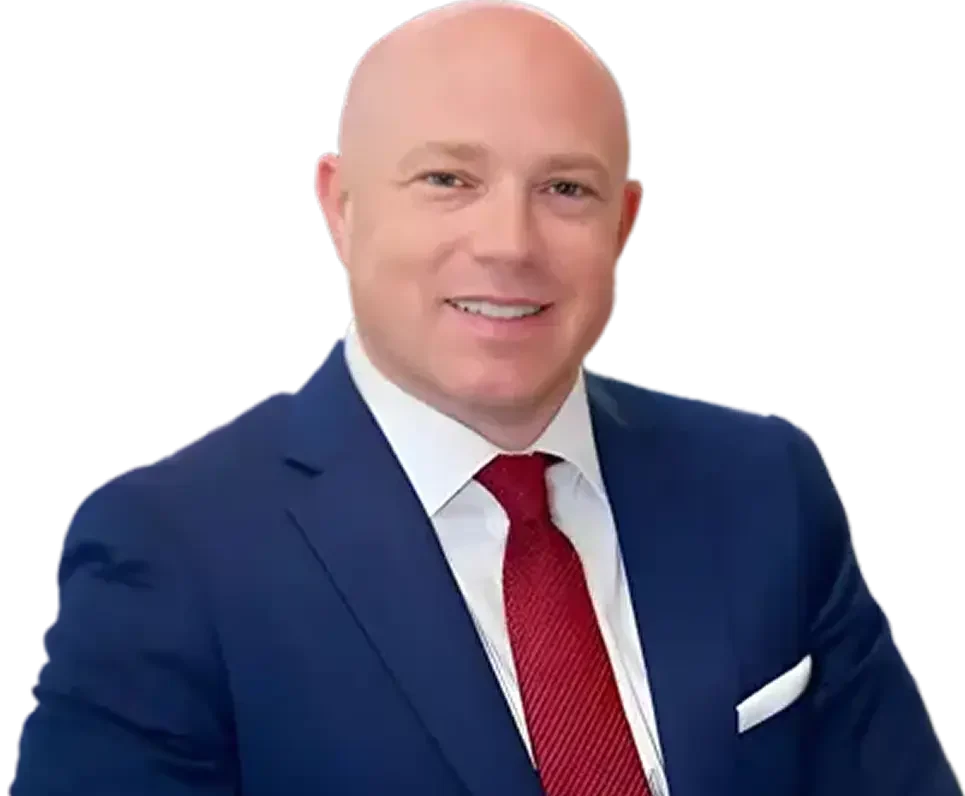
Today we’re excited to introduce you to another member of the Scott Vicknair team because he’s a living testament to the opportunity that is the American Dream. Anton Martynenko is an attorney who calls Louisiana home like all of us, but his story is vastly different. Anton grew up in the former USSR and had a rare opportunity to move to the US as an exchange student. Less than a decade later, he was accepted to Tulane Law School. We wanted to give him the chance to tell his story and reflect on the things he has learned during this incredible journey.
Here’s some of what we discuss in this episode:
0:37 – Hot Topic #1: US Supreme Court Justice Clarence Thomas and his personal relationships
8:17 – Hot Topic #2: National battle over the debit limit
14:56 – Welcome in our guest, Anton Martynenko
15:53 – His childhood in Russia
17:17 – The story of the program that brought him to the US
22:25 – The difference in the justice system in Russia vs the US
29:43 – His perspective on what’s happening in Ukraine
34:40 – What are the checks and balances on the Russian government
All right, good morning, everybody. Welcome to the Overruled podcast, brought to you by Scott Vicknair Law Firm. It is a beautiful Wednesday here in New Orleans. I’ve been thinking it was Tuesday all day. I don’t know where my mind is. But we got a great show today, Brad.
Is it Friday? This week.
It’s 5 o’clock somewhere. It’s not even noon, so we’d have some bigger issues to discuss today if it was 5 o’clock somewhere already.
So, great, great guest today. Anton Martynenko, an attorney with the firm. Super interesting guest. Can’t wait to get to him in a minute. We’ve got two great hot topics for you. We’re going to jump straight into them. Mine today, Brad, is a series of ProPublica pieces discussing Supreme Court justice, not Louisiana justice, but Supreme Court Justice Clarence Thomas. There’s been a flurry of media discussion over the last two weeks surrounding Clarence Thomas, and a lot of it, for those people who have not been paying attention, has been founded upon ProPublica’s series of publications focused on Clarence Thomas’ relationship with a very wealthy person named Harlan Crow. Crow’s the son of a very wealthy and renowned real estate developer. He was born into a wealthy family.
For those of you who don’t know, Clarence Thomas was born into abject poverty in Georgia. Kind of came to the Supreme Court from nothing. Great story by the way. Incredible story. Born to uneducated parents and a father who abandoned the family when he was two years old. Grew up in segregation in the Deep South. And despite all of that, has found himself as one of the minorities on the United States Supreme Court, one of the most powerful and high-ranking positions in the country. He and Crow ran into each other and became friends in the 90s, and there’s been a series of stories regarding that relationship.
For those of you who don’t know, judges, whether it be a local district court judge or a state Supreme Court judge, or in this case, at the highest level, the United States Supreme Court judge, they’re really sort of regulating themselves. They have certain ethical requirements that they have to disclose different relationships. And so this ProPublica series is kind of throwing this discussion in related to Harlan Crow and Clarence Thomas’ relationship and Clarence Thomas’ alleged failure to disclose certain things, calling into question his ethical, potential ethical lapses for not disclosing certain things.
And so it’s just been an interesting story to follow from my perspective. They got into a lot of touch points from the example, Harlan Crow invested in, in buying his mother’s home in Georgia and leasing it back to her. And part of the concept was that he was going to invest money and turned it into historical, essentially, artifact, historical piece, which it is. And there’s been people on both sides. I’ve read both sides of the story. And I do think there probably could have been better disclosure from Justice Thomas, but a lot of the headlines, which have kind of like caught my eye and it was like, oh, what’s going on with this? They make it look so bad.
Back in, I think Crow essentially paid $1,426 for helping a friend of Clarence Thomas’ with rent over three months. And they said that he should have disclosed that. And this was a, a friend, a person who was really, poor off. Clarence Thomas had interacted with, wanted to help. Him and Harlan Crow had this relationship. Harlan Crow decides to get involved and helped this person pay their rent for three months. And the story goes on to talk about how much of an ethical lapse it was because Clarence Thomas didn’t disclose this. He wasn’t involved in the transaction. He was not. And obviously, he, what did he really receive from this? This was a poor widow who he was helping out and felt bad for and was trying to help her. And Harlan Crow did the same.
But it was kind of like taking a back by how that was like a mountain made out of a molehill. I mean, at the end of the day, these judges, whether it be our judges here in Louisiana or federal judges, should be, to the best that they can, doing disclosures of any kind that they think may give the public the perception that they’re not partial. But at the end of the day, these are still people. Yes. And they still want to help people, and they still have friends who are wealthy, they still have friends who they have relationships with. So they should do their best, right? To disclose everything that could be an ethical lapse. But, you know, there’s been other examples in the past.
For example, Justice Sotomayor in 2021, she amended her financial disclosure form to add six trips that had been paid for by a third party that she had just forgotten about. And she realized an omission and she amended the form. This is a regular routine when judges will forget, a reporting thing, they’ll go and amend their disclosure form. And nobody really questioned her integrity back then. Justice Jackson, hadn’t disclosed her husband’s medical malpractice consulting fees for years or the income he got from it. She noted the oversight in the form and then disclosed it. So these are transactions where they were directly involved. No question.
But well, and there was a part of the story with the Harlan Crow that Clarence Thomas allegedly went on multiple trips with him, similar to Justice Sotomayor, and he did not disclose it. Probably should have been disclosed. So I think there’s definitely going to be a situation where he needs to get back to his disclosure forms, amend them, and ultimately clarify certain things here that may need to be disclosed. Some may not. But it really kind of struck me as like, there may be a lot of palling on happening here with Justice Thomas because of the ideological divide.
There’s certainly, you know, one, and that kind of is what bothered me a little bit about the story the most, to be honest with you, is my last comment on it. Is yes, these Supreme Court justices are people and they have political opinions. But if the public only understood how much of their work has nothing to do with politics, they only see the, you know, a lot of times the media is amplifying the high-profile cases that really get everybody revved up on that like 50/50 divide. But much of their work is focused on the commerce clause, is focused on. It’s pretty boring stuff. It’s pretty boring stuff that nobody really gets excited about, except for us, law professors, and people and law students writing law review articles.
And you’d also be surprised depending upon what areas, whether we’re talking about the fourth and fifth amendment, or we get into the 13th and 14th amendment, which areas or these topics hitting there always like divergent groupings of the judges as well. Like we just think it’s a 5/4 or a 6/3 divide. You see opinions where you got somebody thought of as a classical liberal, like Elena Kagan, and she’s teaming up with.
The sides change. The sides changed.
Based on the constitutionality. They’re interpreting the issues.
Absolutely. And they all come from a perspective of either originalism, textualism, a living constitution theory. They all have different theories for how they interpret legal text and the Constitution. And everything is not really divided by politics. But closing thought, I just thought it was an interesting story that has been a ton of media surrounding this. I really dove into it. I do think there’s probably some necessitation for Justice Thomas to go and amend his forms. But the more I dug into some of this, it it seemed like a lot that was, you know, made. It kind of sounds more like it’s getting a lot of attention.
We’re nearing another political cycle, you know, we have the presidential election coming up. So, you know, a lot of times this is what we see when these issues come about is that there’s some political gain to be done by this.
Yeah, and I suspect we’ll talk about this with Anton a little while, but I am at least thankful, even that like we, you know, are able to have an institution like the media, who is fact-checking our judges, who are public servants too. And they’re looking into these things and calling it into question. So we need that. We need if a judge is not disclosing something, we’re all caught up in our busy lives with our families, with our jobs. We’re not like hanging around to figure out whether or not judges are disclosing things. We need somebody watching.
At the end of the day, it’s about transparency. And we want to make sure these people are being impartial and it’s not influencing their decisions. That’s really the ultimate goal. Now, whether or not somebody’s got a political agenda and pushing these things or not, that’s a different story. But, we’re going to be thankful that we have the media, at least fact-checking and checking into these things.
Absolutely.
All right, what you got for us today?
Well, let’s let’s do some more doom and gloom. My.
One day you’ll make us optimistic. Yes, I’m gonna talk about rainbows and butterflies next week.
So, what caught my eye this week, where there’s a, the new cycle right now is about this national battle over the debt limit in Washington. We’re squaring off once again and kind of a here we go again type situation where the country needs to borrow more money. There’s a lot of political posturing over that, obviously, between, the, by our political leaders. But it seems like this keeps coming up year after year. And it’s like, why do we keep getting to this point?
For those of y’all who don’t know what I’m kind of talking about, but basically think about it like this. The government takes in so much money every year through taxes and tariffs and things like that. The government also spends money. That’s basically the function of our government. They take in money, they spend money. Well, believe it or not, most years, the government spends more money than they take in. And it’s been going on for quite some time.
I didn’t know that. Yes. It’s an amazing thing. These fiscally conservative people are, spending more money than they take in. It’s a lot easier when it’s not their money. Yes. And, we’re all asleep at the wheel while this is happening. But essentially when they can’t bring in enough money to cover the spending, they have to borrow the money. Okay? And that’s what the US government does. And when we talk about the national debt, that’s the amount that they have had to borrow to cover the shortfalls.
It’d be like if I got my paycheck and, you know, spent it all up and then didn’t have enough money to make my mortgage payment, I’d have to get it from somewhere. The way the US government does that is they issue treasury bonds and things of that nature. But the money has to come from somewhere. Wrap your, wrap your, you know, head around this number and let this thing sink in. The current deficit, the amount that we have spent more than we have made. I don’t think I want you to say it.
Here’s the number for you for today. $28 trillion.
Wow.
Came and wrapped your head around that, okay? That’s how much we basically have loved to spend beyond our means in the country. Where this fight is coming up in Washington, it is essentially by law, the US government can only borrow so much money. And this dates back to, I think like 1917 with some act that passed. But essentially there is a cap on how much treasury bonds the treasury can issue. And every time we hit that limit, well, they have to go back and reamend that particular act or that law to increase the amount.
So, between, and it used to be, you know, this happened quite regularly. It didn’t make the headlines. It was pretty routine. They would borrow money. Now it’s becoming more politicized. Between 1940 and 2010, I found this statistic, they raised the debt limit 78 times.
Wow.
Without much fanfare. But now these days, it’s becoming increasingly more politicized. You know, and the reason why it’s getting politicized, it’s the growth of the debt is ridiculous. If you look back in 1996, that’s when we first broke the $5 trillion mark. Now, you know, this year, 2023, we’re at, you know, what is it? $28 trillion. And what you want to kind of compare that is like, there’s a big difference between if I’m making $50,000 a year and borrowing $10,000. Suppose if I’m making $50,000 a year and I’m borrowing another $50,000 on top of that is a shortfall. Right.
So what we always want to do is kind of compare that to what does the country produce? You know, how much is their revenue? Back in 1996, the debt was only 63% of what’s called our gross domestic product, which is the amount that the US economy generates per year. So we were still generating more products and services then, we were borrowing. With that we had borrowed. So it’s kind of been checked. At that point. Now we’re over 120% of our gross domestic product. So that means if we took everything the US produces in a year, every single dollar and paid the debt, we’re still 20% short of it. So it’s growing exponentially.
And the biggest problem is, you know, at some point this party has to stop. We have to stop borrowing the money, but the fixes are painful. You know, the way you have to fix this is either you have to cut spending, which nobody wants to do. You have to increase taxes, you know, either you spend less or you have to bring in more. Right. Those are not politically, subject to, you know, popular type things.
And the third thing is structural implementation, reforms to our entitlement programs. Social security and Medicare. We do have an aging population, that’s adding to the problem. We have more people taking out of the system than are contributing in years past. So, this really becomes a problem. And then, you know, we talked in one of the prior shows about interest rates going up and some of the commercial debt crisis. But when interest rates go up, the US government has to spend more money in debt service on these, these treasury bills that they issue. So it becomes that part of the interest expense becomes a bigger expense on the budget.
So, I guess the point I’m trying to make to everybody, we’re getting ready to enter another political cycle, you know, this is something we really need to start paying attention to when we’re electing these officials because something’s got to be done about this sooner or later. I mean, it’s spiraling out of control.
Yeah, and I’m just going to say I’m so over the debt limit. Like every year, that’s like two crises of the debt limit, they always raise it. And it’s brinkmanship. Every single time.
It is brinkmanship lately. And probably has been for the last 10 or 15 years. But I think part of it is rooted in what you said. Is like the debt problem is going to have to be solved at some point. And the stuff that I’ve, yeah, at least the stuff I’ve seen that they’re proposing that the republican party is negotiating with president Biden over the debt limit increase is mostly stuff out of discretionary spending. So clawing back some unspent COVID dollars, which I think everybody would agree with for the most part. Because I mean, we’re seeing inflation and overspending at the federal level, really impact everybody’s day-to-day lives when you walk into the grocery store and eggs are 400% more than they cost two years ago.
But what nobody wants to talk about, especially people who need your votes to get elected, is to really fix the debt. And the long-term trajectory of the economic interest of the country is we’ve got to get into the non-discretionary spending, the social security, the Medicare, the things that people don’t want to talk about reforming that are asking for your votes. Because that’s the that’s the, you know, bulk of the budget.
You don’t get elected talking about that.
You don’t. They used to call it the third rail of politics. I don’t know what it is now, they just, they all still run away from it. And it’s still a rail.
Well, it’s time that we hold their feet to the fire at some point because it’s, I mean, $28 trillion. I saw a graphic of it online, like the dollar bills stacked. It’s ridiculous. Honestly, the scariest thing what you told me is the percentage compared to GDP back from 1996, 63% back then. And now we’re like 120% over what we actually produce as a country. And it’s going to have to be that, or we’re going to keep going through these inflationary cycles and have other painful pain points in the economy.
So parties got to stop at some point. And, you know, at some point we have either tighten the belt or something. And, you know, political elections and these governmental, you know, these governmental officials that we’re electing, we’re putting them in position to do these jobs. And I don’t think they’re doing their job. Well, very interesting topics and excited to get on to our guest.
All right guys, well, today we have an interesting guest. We have Anton Martinico. He’s one of our staff attorneys and a close friend of ours as well. We’ve brought him in today to talk to us. The reason why I’ve brought him in, he’s a very interesting backstory. He grew up in Russia. He ended up here in the states with some kind of interesting events that took place to get you here. And I kind of wanted to go through that. Tell us a little bit about you, but really about your upbringing in Russia and how you’ve made it to where you are today at our office and working with us.
All right. So tell us about that. Where, where did you grow up and, give us some background here.
First of all, hello to everyone. I’m originally knocking over some merchandise. And, let’s just start with a disclaimer. Don’t worry, Brad’s gonna pay for it.
Oh, he’ll pay for it. It’s a bit of an appearance as well. Not really. But your podcast now does have all the earmarks of Russian disinformation. To say the least.
Terrific. We’re making some headway. That’s right. But, you asked, you know, how I got here.
Oh wow. Where to even begin? So I was born in actual Siberia, just a few hundred miles away from China. A place called Irkutsk, near Lake Baikal. And when I was born, it was about negative 40, so 40 below zero. On the day I was born. So it’s a good, good place. My parents didn’t stay there. We decided to move. So I grew up on the European part of Russia, just a few hundred miles away from Moscow. And, you know, an only child, you typical upbringing in the 90s to where our parents weren’t there to supervise us much. Everyone was, I think more busy with trying to figure out how to survive in a country that, well, again, imagine the entire country just collapsed. No markets. No economy. There’s no place like Walmart. There’s no place like IKEA or Sam’s Club, whatever. So, people had to hustle, you know? So it was a pretty much unsupervised childhood. Until. Wasn’t the best? It was the best. It was the best. It was the best.
I, you know, I actually now worry about that with regards to my children here. It’s like how are they growing up? You know, we shuttle them everywhere from place to place. And we justify it with the fact that, well, you know, there’s so many dangers out there, you know? Yes. And maybe they are. And actually, they are, in fact. So, but it does make me miss my unsupervised childhood because I think it did provide a certain opportunity for the mind to wander. To learn.
Yes, absolutely. To make your own toys.
So, tell me the story again. I’ve heard it before, but I want you to tell the audience, you know, you’re sitting in grade school, I think at some point, and where is, how does it opportunity that you’re good coming to the United States? Tell me about that story again. How, how did you get here?
A random folks came into our classroom and,
These are government people, right?
No, they actually were associated with a gentleman by the name of Mikhail Khodorkovsky. He was, at one point, Europe’s richest man, and he made his money. He was actually a very talented banker, brilliant individual. And then he went into oil. So he had this oil business. The company was named Yukos. And his goal. We’re talking about 2001, 2002, just a couple of years after Vladimir Putin came to power. So what Khodorkovsky wanted to do, he wanted to create kind of a western-style company with shareholders, more or less independent board, CEO, you know, transparent. And do that in Russia. Which, by the way, unprecedented. And it didn’t happen because the guy landed for 10 years in prison.
But as he was trying, as part of creating this corporation, this transparent western standard corporation, he wanted to do, I guess some charity work. Outreach like that. And what he decided to do is they created this program called ORAP, Open Russia Ambassadors Program. And so they went to a whole bunch of high schools in Russia. Well, there’s no high school, middle school, everyone’s got the same building. Odd fact. So they went to our school and they would just walk into our classroom and be like, hey, who would like to try out to go to the United States of America for a year? And they said, we’ll pay you a stipend.
I was like, how much? Like $80.
What? That was like times more than my dad made at the time. I mean, now currency rates are a little different and so on and so forth. But I was like, a year away from the parents? With this stipend?
No, but, you know, we went through a couple of, you know, test rounds in terms of.
How did your parents handle this news?
My mom was not happy. My mom was not happy. But, you know, I was already a very independent child at the time.
Was the idea that they were trying to find people and send y’all to America, get y’all exposed to that culture, and then come back with those ideas and then work for them? Was it more of a recruitment?
That was the idea. That was the idea. So we’re going to send young people, they’re going to, you know, pick up on what, again, an open society, democratic society is like. They’re going to come back to Russia, and we’re going to have them maybe as resources. Maybe as our future managers. So at least the.
And some of them didn’t go back, obviously.
Well, I’m one of them. No, I actually did go back for a year, a year and a half.
So tell us about that experience. I mean, you, you got involved in that program. You ended up. And so, and you also asked about my parents’ outlook on that. My, my dad was always saying to me, he has, he’s Russian through and through. But he was always saying, it’s like, man, you got to get out. I don’t have a KGB affiliation. I don’t have a little oil well. You have to get out. And so, this was an opportunity. It was an opportunity. But he was saying it, kind of half-jokingly. You know? And so when that opportunity arose, this was, you know, me coming to my parents and saying, look, I can do that. And I can actually go somewhere for a year, and you’ve been telling me all my life. So it was a lot. A serious argument about that.
Yeah. How serious are you? And I think for a parent being a parent now, it’s a huge decision to let your child go somewhere for a year, especially abroad.
Abroad. I’ve never been on a plane by that point, you have to realize. So, eventually I do arrive in a little plane, American Eagle, and Texas, and a surreal experience starting from there.
So you were an exchange student at that point?
I was an exchange student. In another way to think of it is, my high school’s pet. For a year, that you can make fun of, teach them the words that don’t mean what they mean, and I still may use some of them today. But, hope not. But then I went back and, I went back and at that point, I had a decision to make like what I want to do with my life. And my dad’s words came back in terms of not having KGB connections or oil wells, and I decided to come back and found myself in a community college in the middle of nowhere in Oklahoma. Played a bunch of schools. So, you know, finally in community college and then undergrad, and then I decided to come to Tulane University School of Law. So, and that’s how I ended up here.
Very interesting. I’m dying to know the owner of the company, did he get a fair trial before he went to prison in Russia?
He did not get a fair trial. At least in my opinion as an attorney. They put him up for 10 years. So actually when I was here, he got locked up, arrested and locked up. And it was really surreal to see because I had no connections to this man. I didn’t know anything about that, man. And here he did something amazing for me because this whole.
Changed your life.
Absolutely. And he did it without any motivations, without asking for anything in return, without any obligations on my part. So, you know, sure, he might have done other, perhaps ruthless things to get to where he is. But as far as I was concerned, he was a good man. And it was quite surreal to see him, you know, behind bars and so on and so forth. And Vladimir Putin, of course, let him out. I think it was a year 2014. The Olympic games were coming up, so he wanted to still flirt with the West. And I’m like, what happened last year? So he’s still trying to play nice. So it’s a gesture of good faith.
You know, it brings up a good point and I know you have a little bit more insight about this as well with the difference in the, the justice system and the court systems between here and Russia. How could it be worse? How could it be worse? It’s like, well, what’s the saying that 99% of the lawyers give our profession a bad name? Yes. Something like that. Just again, by way of a disclaimer, I think that working in a justice system as an attorney, civil attorney, or criminal attorney, you eventually do attain a dose of cynicism in your outlook. Especially in Southeast Louisiana, because in Southeast Louisiana, you often walk into a courtrooms like, hey, you know, and you see that opposing counsel saying hello to the judge and they all went to the same school together. And when I say school here, they’re talking high school in New Orleans.
That’s a painful learn.
Yeah, painful learn lesson. Where did you go to school?
Tulane Univer. No, no, no, no, no. Where did you go to school?
So, yeah, you see cronyism. You do see how politicians with exponentially outnumbering resources and the other party, they prevail. And so on and so forth. You do see a lot of that here. But I think here, what makes me wake up, go to work every morning, happily so. And I’m not saying it just because I have to. Is because still, despite all those odds, we have an opportunity as attorneys here to make a difference for that particular client. Even if we’re going to lose sometimes, I’m going to make a hell of an argument and I’m going to give them the best representation I can. And you know what? Sometimes, well, actually most of the times, justice does kind of prevail. Judges and juries do see through that. And if you don’t get it at a trial level, you might get it at an appellate level.
Now, comparing that to Russia, I actually have some of my classmates who became, well, I guess, won’t be the best analogy, assistant district attorneys, assistant prosecutors and so on and so forth. And the perspective that I’m getting, well, I was getting, is that you essentially are there to announce the verdict. All the decisions are made. All the verdicts are already pre-printed. They’re brought to the judge from somewhere, somebody, and so on and so forth. I actually have, experienced my best friend from childhood happened to get in our senior year, last year of school, into a fight with an off-duty police officer. And I also got to see first-hand how that system did him. The verdict was already pre-decided. And his attorney’s role was that of a mercy worker. His attorney was able to bring notes in between to make things perhaps better for him in prison. But again, this is a job in Russia, being an attorney, where you can do very little. And you can say very little. You don’t have an impact. Yes.
And I mean, of course, to every rule, I think there are exceptions. I’m sure there are big, civil rights and human rights advocate attorneys in Moscow. But, you know, everybody knows and so on and so forth. But they have, attained what we shall call escape velocity. You know, that’s sort of beyond the system. They have so much visibility to where nobody messes with them.
Yes.
Another thing too, you know, coming from a different culture and a different country like that. What are some things that surprised you about America that maybe you had a different perspective of before you got here and now you realize, maybe that perspective is not what other people think outside this country.
Oh, like Jerry Springer show not being true? Actually, they did throughout the 90s. You say it’s not true, but when you go to family court, maybe it doesn’t. They’re true. You don’t go to family courts, see. Family court or actually, you know, our work, our succession work. I mean things that families will do to one another. It’s amazing. We have the best clients, but also the most entertaining clients.
Human drama part of it. But coming back to your question, what surprised me the most about America? I think my biggest surprise was to realize that the United States of America is not that monolithic, one, centralized, unified, decision-making people. It has different faces. So there are, first of all, yes, first of all, there are actual real institutions. They’re not like KGB fast.
For example, my grandmother, she was just quite religious and she’d tell me, you know, at any time we’d never go for a confession to a Russian Orthodox priest here in Soviet times, like, why not? Grandma? Like, well, every priest is working for the KGB, you know? So there are a lot of institutions here again. It’s true. I know that’s the funny part. Probably your grandmother was probably right. And that is exactly the best place to put a KGB agent, right? It’s like Robert Hanson, you know, the guy in charge of catching the Russians. Well, you know, working for the Russian, right?
No, but what surprised me here is again, not realizing how every, I mean, this truly is the United States of America. I’ve mentioned the institutions. So the reason I have done so is because you have all those different centers of power with different interests. For example, what goes on in Washington is not obviously the same thing that goes on in Baton Rouge. And they’re varying interests. And then you also have to add things like, oh, I don’t know, pharmaceutical and military industrial complex. They have their own agenda. Then the legislators. Then of course, we have the Supreme Court with this own fascinating institution.
But going back now to geography. The biggest surprise was to realize that the United States of America is really like this United States. It’s a patchwork of countries that have come together, with those two beautiful documents, you know, Declaration of Independence and the Constitution, they decided, you know what, let’s let’s try to figure this out together. And again, when the United States is talked about abroad, even when my dad with all the sort of second-hand, how we say here, hearsay, knowledge and background of what America is, even when we talk, he’ll still make this reference, Americans, Americans, Americans, as if.
One group. It’s one group, it’s one monolithic thing. And for example, Russia has, well, over 100 different nationalities. Their multiple races and so on and so forth, but still, it’s more of a monolithic culture. The center of decision-making is the same. Now, here, I mean, I had the opportunity to live in Oklahoma, in Texas, in Arizona, and now in Louisiana. And, you know, mentalities are different all around. And for example, now in California, I have just heard about the Californian’s decision about the reparations or that after year 2030, I believe 2035, you can no longer buy gasoline-powered cars.
Great travesty, by the way. From the sound of a V8 alone. But anyway, it’s hard to, for example, to buy a weapon if you want to protect your home and family. But the thing is, if you don’t like any of these rules, if you disagree with all of that, you can just up and move to Texas. And if you don’t like the food in Texas, or how Texans spend their pastime, which is eating, by the way. You can move to, you know, another place, like Louisiana. New Orleans.
That was a joke, by the way. I love Texas. But literally, because we don’t like to eat in Louisiana. Yeah, we don’t like to eat. And the food is terrible here, so guys, don’t come. Don’t come or roll. More for us. More for us. So again, that was the biggest surprise to realize that, every state is almost like its own country.
Yes. And do you think that’s a view that a lot of people outside of the United States actually view us that way?
No. All right. Well, actually, being in the South, like I mentioned, you know, I’ve lived in Oklahoma, Texas, Arizona, Louisiana. It’s really South. Especially Louisiana now. It’s kind of a deep South. If I were to call my wife, by the way, shout out to my beautiful wife, who’s also an associate at Scott Vicknair Law. So for example, if I were to tell my wife, you’re a Yankee. I mean, they would be, I mean, we would, it’s fighting words.
Oh, yeah. I’ll be asked to spend a night at the office, or elsewhere, you know? It’s a fighting words. But for example, abroad, the word Yankee, you know, yanks, they are first of all, all of the Americans. Again, great misunderstanding of the American culture and diversity that we have. Diversity that we have. So, yes. That’s probably was the biggest surprise.
Let me, let me ask you, Anton, I’m just fascinated to know your perspective on what it’s like from, from your background, from where you came from to live here, with everything kind of going on in Ukraine. Like, have you had to deal with that here, or do you have, what is your perspective on all of it?
First of all, my last name Martinenko. So Ukrainian last name. Right. And, complicated question. So about the third of my classmates, same Enco last name. Also Ukrainian. My grandfather was full Ukrainian. You know, came from Lviv, went to Siberia, building roads during World War II. And, it’s a complicated question because we have family. Right. Like I have family on both sides. I have aunts in Ukraine. My dad tells me that parts of the family and some of his classmates, no longer talk to him. I mean, this is a one-man’s decision. Vladimir Putin’s decision that has really split the country. So it’s, it’s probably as ludicrous as going to war with Canada.
I was going to war with Canada.
Or Louisiana, taking up arms against Texas. Something like that. This is just as ridiculous. At the same time, as the conflict goes on, and again, this is purely my personal perspective, personal view that, I mean, I don’t pretend to, you know, represent anyone or speak for anyone else. And I view this again, mostly as an observer. But as I’ve observed this conflict, for going on for over a year, I also have seen a change in attitudes. Even, again, with my father, with my best friends. It’s been a pendulum.
So first of all, when it just happened, it was a shock. Everyone was like, what is going on? How could this, how could this happen? How could this even happen? Then it went into, oh, what’s the Russian propaganda? Then it went into, but no, no, no, but there is a Ukrainian propaganda. And then my classmates, my dad, all acquaintances I have, they start losing their peers. They start losing their sons. The body bags have a big impact on both sides. Huge impact. And so if at the beginning of the conflict, it was just overwhelming rejection of it, then now a year, over a year in, we’re looking at, first of all, the effect of propaganda.
I mean, look, we have effective propaganda, but Putin’s propaganda takes it to a whole new level. It’s a professional. He’s a professional. CNN has a lot to learn, Fox News, sorry, shout out to the big corporate media. But, effect of that, and also the effect of us body bags to where even if people rationally understand that this is not the right war to wage, that the Ukrainians, of course, obviously have a right to defend themselves, and what is going on there is atrocious. People nevertheless, I think, can no longer disconnect from that emotion of losing a loved one. So now the Ukrainians to the Russians have become this caricature, of the aggressor. And the same thing for the Russians. And Ukrainians. I mean, they have become caricatures. And I think that’s the biggest travesty. Again, knowing how close the nations are. How close the cultures are.
Having family in both places. Have a different impact on you, I imagine. Is it difficult to be so far away and watch it from here?
I mean, obviously, it’s practically much better knowing you’re getting to know you. I’m glad that you’re safe. Right. Well, and that’s again, that’s, gives me a great, it’s a great outlook. I think many, many Russians may share that outlook. Maybe not. When something happens here, I always think, hey, it could always be worse, ladies and gentlemen. Always get worse. It’s all about perspective. That’s true. So right now, I could be in a trenches, you know, somewhere getting, you know, shelled and so on and so forth. So I’m thankful for not being there physically. I also think that the year and a half into it, I like most of Americans, probably like you, gentlemen, kind of desensitized to that. Because there is so much, there’s such a flow of information to where eventually become desensitized.
And also, you know, as with every system, there has been so much speaking of desensitization. Is there such a word? I don’t know. But there’s been so much corruption and against so many different groups of interests, influencing this conflict, taking advantage of it. I mean, I think there’s something around like a thousand, I mean, last I heard, they’re not called bribers. They’re called lobbyists.
Lobbyist. That’s the word. They are lobbyists. They are bribery. They are bribery. It’s actually legalized bribery. But anyway, you start doing the translations, the words pop up. I mean, I think, you know, I heard the reports of, there are being, you know, many, many lobbyists for Ukraine there, for Russian interest and so on and so forth. I also think, again, we have become desensitized. I am with the rest of society on that. And, you also see so many dirty things happening. Of course, and in the end, you also have a question. Like, look, I pay my taxes here. A lot of taxes, state, federal. You guys too. So the question becomes, why are our taxes paying for somebody else’s war? Right. So, but that might be a less popular opinion. Yes. So.
Well, that’s a whole different bucket hole that I don’t want to run down now. I mean, let’s talk about more serious thing. Because again, gentlemen, it could always get worse. I want to ask you to get back to something you said that was interesting related to the legal system in Russia. So if somebody’s corrupt there, like, who’s checking in on it, right? Because the government is basically controlling the legal system. Where at least the corruption we have here, we know the DOJ could be wiretap and a judge and put them in. Of course. Or for example, you mean, you could go through the media. And the media, having their own interests and having, you know, been independent enough here, I mean, they would love to run a story on somebody’s political corruption. And we see it here every day and much respect. That doesn’t happen in Russia. That doesn’t happen in Russia.
Yeah. So as much as we complain about the news media and all that stuff too, that’s actually an institution that provides some kind of control over the stuff.
Of course. Of course. Because again, and so might be motivated by self-interest, but in the end, it works. Right. I think actually, by the way, it’s a brilliance of the United States system, of our Constitution, is that it doesn’t. Unlike the Soviet Union, which was founded on this idea of, or at least the front idea, this ideology of, you know what, we’re going to create this more perfect society. I think the great virtue of the United States Constitution, of our founding fathers, was that they looked at it and said, you know what, humans are what they are. They have those fallies, they have self-interests, but we have to create a system that accounts for that.
Have to create a system that accounts for it. It’s a system that doesn’t fight against human vice. It’s a system that says, look, despite all of that, yes, let’s put them aside. Let’s try to make it work. And that’s why I think it’s brilliant. That’s why I think it’s largely unchanged. This document has persisted for over 200 years. Yes. And, it’s strong me because you were talking earlier about, like, there’s public criticism going on now, not us here, but earlier in the show with, Clarence Thomas and some of the, reports that ProPublica has been running against him. And there’s been a lot of media reporting on that, whether some of it’s valid or not. But there is a media and an institution which is checking the court system. Of course. And so here, you know, we, Brad, me, you, as attorneys, we don’t have complete power. We answer to the judges. We answer to the Supreme Court. We answer to Charles Plasmar, in the state of Louisiana.
And our clients. Not to be forgotten. Don’t forget the clients. They are ultimately the boss. Well, the judges have checks and balances. They answer to the Supreme Court. They answer to the Bar Association. And I’ve seen a judge, I’ve seen judges since we’ve been in practice who have been accidentally caught by a wiretap by the DOJ and get indicted for corruption. Unfortunately. But there is at least that checks and balance here.
Of course. Of course. I really think that, again, it’s a very, very personal reflection, personal account. I am, I have been very fortunate. Call it blessed, call it fortunate. To, you know, have received scholarships, have had certain opportunities. I did work hard. But I live with a beautiful family, in a beautiful place. And I’m working in a beautiful place.
Yes. Thank you, gentlemen. I think he wants to keep his job. But what I hear a lot is, there’s a lot of this outlook to where, oh, America is this, America is that. Says a lot of criticism without sometimes recognizing. And sure, we have all those problems. You know, corruption, cronies, and yes, it’s probably no longer the place of as much opportunities as some blue-collar worker might have had in a factory in Michigan in the 1950s. To where you didn’t even have to have a college degree or diploma to go ahead and make a decent living and get your family a house and pay the mortgage and leave something behind. Perhaps it’s not as much of an opportunity. You know, with this huge split between people who have everything, people who have nothing.
Yeah, those splits are growing. Political splits and divisions are growing. Opportunity may have diminished. But still, and my life is again, personally, for me, and for my children, I think it’s the best example. It’s a great place of opportunity. And it’s a place where vice can be spotted and addressed. Against the odds. And it is still better than pretty much anywhere else out there. So you’re living proof that the American dream is still intact. You can definitely immigrate here and make something of their lives that they wouldn’t have had otherwise. So that’s good to hear.
Because a lot of times in the news these days, we hear all about how bad America is. How we should feel bad about being Americans. And how we’re closing doors. But this is still alive. This is still alive. But the thing is, it’s not a selling point. You know, it’s not as juicy as, the Supreme Court of Justice, Clarence Thomas and his spouse. If just been found out.
Of course, it’s not just as juicy of a news. It doesn’t sell as well.
Yeah, doesn’t make the headlines.
Yeah, doesn’t make the headlines. So it’s good to give a little recognition today.
Yes. So we want to thank you for coming in today, Anton. It was a, a great backstory that you have. I was fascinated when you told me the first time. Every time I hear it, I love hearing it again. So.
Well, thank you so much for having me over.
Yeah, I don’t want to thank you too, but I can’t let you out of here without knowing, what is your favorite South Louisiana food?
Oh, Po’boy. Po’boy. We’re talking. With the roast beef and shrimp.
Oh, so we’re talking. Surf and turf. Surf and turf kind of Po’boys. And we’re talking, what’s your favorite place to get it?
Oh, not a sponsored advertisement. Not a product placement. Parkways. Parkways. Parkways, Baker, and T. You know, I knew that we had a connection amongst the intercontinental divide of Russia and the United States because my favorite Po’boy also is the surf and turf at Parkways. So here we go. To that. I was going to cheer with our empty, you know, promotional cup and to that, sir. Maybe this, you know, Parkways, more people, especially more politicians, just tried the amazing flavor of it. And experienced the love. It’s the great United. And the worst of them. It could be a great unite. It could. I mean, if it could, if it could if it could get in the war.
This episode was brought to you by Parkways Po’boys. Shout out to Parkways.
Thank you so much for being with us. Thank you so much.
Alright Anton. Been a pleasure. Thank you. Take care.
All right, what a great show today, Brad. Love talking about the issues with, Justice Thomas, as well as the debt limit. And what’s going to happen with that. It’s going to be interesting to see how both of those stories proceed forward. And what an incredible guest today, Anton. So interesting. Loved hearing about his different. We’ll have him back. We could probably have talked to him for two hours. And loved hearing his different perspective on where he grew up, his country, and then differing perspective of living in the United States as we kind of look inside the conflict going on between Ukraine and Russia.
What a great show. Thank you all for listening and being with us today. Can’t wait to see you next time on Overruled. Brought to you by Scott Vicknair.
Thank you, guys.
Scott Vicknair. Injury attorneys. We fight for the win. Information is for illustrative purposes only. And does not constitute tax, investment or legal advice. Always consult with a qualified investment, legal or tax professional before taking any action.
Let's Get Started on Your Case
NO FEES Unless We Win!
Insights and Updates from Our Legal Team